
Introduction
Caquis fruit is a delicious and nutritious fruit that is gaining popularity worldwide for its sweet taste, vibrant color, and impressive health benefits. Often confused with persimmons, caquis fruit is actually a variety of persimmon known for its smooth texture and rich flavor. Whether you’re looking to improve your diet, boost your immune system, or simply try a new fruit, caquis fruit is an excellent choice.
In this guide, you’ll learn everything about caquis fruit, including its nutritional value, health benefits, how to eat it, and practical tips for selecting and storing it.
What Is Caquis Fruit?
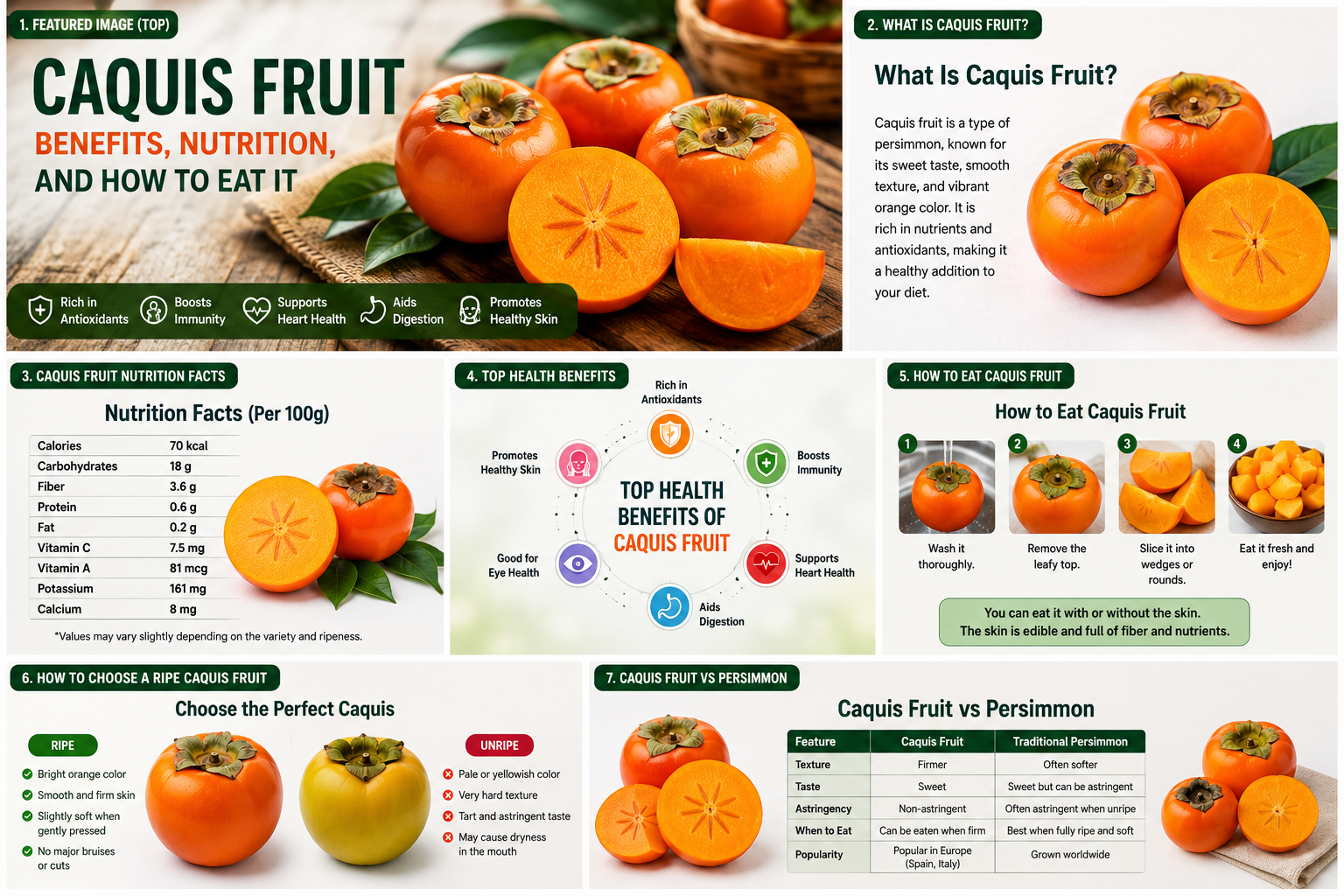
Caquis fruit is the Spanish name for a non-astringent variety of persimmon. It typically has bright orange skin, a round shape, and a sweet flavor when ripe. Unlike some traditional persimmons that must become extremely soft before eating, caquis fruit can often be enjoyed while still firm.
The fruit originates from Asia but is now cultivated in many countries, including Spain, Italy, Brazil, and the United States. Thanks to its naturally sweet taste and high nutrient content, caquis fruit has become a favorite among health-conscious consumers.
Characteristics of Caquis Fruit
- Bright orange to reddish-orange color
- Sweet, honey-like flavor
- Smooth and edible skin
- Rich in vitamins and antioxidants
- Can be eaten fresh or used in recipes
Caquis Fruit Nutrition Facts
People are adding caquis fruit to their diets mainly because of its impressive nutritional profile.
Nutritional Value per 100 Grams
| Nutrient | Amount |
| Calories | 70 kcal |
| Carbohydrates | 18 g |
| Fiber | 3.6 g |
| Protein | 0.6 g |
| Fat | 0.2 g |
| Vitamin C | 7.5 mg |
| Vitamin A | 81 mcg |
| Potassium | 161 mg |
| Calcium | 8 mg |
The exact nutritional content may vary slightly depending on the variety and ripeness of the fruit.
Top Health Benefits of Caquis Fruit
1. Rich in Powerful Antioxidants
Caquis fruit contains antioxidants such as beta-carotene, flavonoids, and polyphenols. These compounds help protect your body’s cells from damage caused by free radicals.
A diet rich in antioxidants may help reduce the risk of chronic diseases and support overall wellness.
2. Supports Immune Health
The vitamin C found in caquis fruit helps strengthen the immune system. Regular consumption can support your body’s natural defenses against infections and illnesses.
Vitamin C also contributes to healthy skin and faster wound healing.
3. Promotes Healthy Digestion
Caquis fruit is a beneficial source of dietary fiber. Fiber supports healthy digestion by encouraging regular bowel movements and maintaining gut health.
Benefits of fiber include:
- Reduced constipation
- Better digestion
- Improved gut bacteria balance
- Increased feelings of fullness
4. Good for Heart Health
The combination of fiber, antioxidants, and potassium makes caqui fruit beneficial for cardiovascular health.
Potassium helps regulate blood pressure, while antioxidants may help reduce inflammation associated with heart disease.
5. Supports Eye Health
Caquis fruit contains vitamin A and beta-carotene, nutrients that play an important role in maintaining healthy vision.
Regular consumption may help:
- Protect eye tissues
- Support night vision
- Reduce age-related eye problems
6. May Help with Weight Management
If you’re trying to manage your weight, caquis fruit can be a smart addition to your diet.
It is naturally low in fat and calories while providing fiber that helps you stay full longer. This can reduce unnecessary snacking throughout the day.
7. Promotes Healthy Skin
The antioxidants and vitamins found in caquis fruit support healthy skin by combating oxidative stress and encouraging collagen production.
Many people include antioxidant-rich fruits in their diet to help maintain youthful-looking skin.
How to Eat Caquis Fruit
Many people wonder how to eat caquis fruit properly. Fortunately, it’s one of the easiest fruits to enjoy.
Eating It Fresh
- Wash the fruit thoroughly.
- Remove the leafy top.
- Slice it into wedges or rounds.
- Eat it with or without the skin.
The skin is edible and contains additional fiber and nutrients.
Add It to Salads
Persimmon fruit pairs wonderfully with:
- Spinach
- Arugula
- Goat cheese
- Walnuts
- Pomegranate seeds
Its sweetness balances savory ingredients perfectly.
Blend into smoothies.
For a nutritious smoothie, combine:
- 1 ripe persimmon fruit
- 1 banana
- Greek yogurt
- Almond milk
- Ice cubes
Blend until smooth and enjoy.
Use in Desserts
Persimmon fruit can be added to the following:
- Fruit bowls
- Yogurt parfaits
- Cakes
- Muffins
- Tarts
Its natural sweetness may even reduce the need for added sugar.
Make Homemade Jam
The soft flesh of ripe caquis fruit works well in jams and spreads, making it a versatile ingredient for breakfast recipes.
How to Choose a Ripe Caquis Fruit
Choosing the right fruit is important for the best flavor and texture.
Look for These Signs
- Bright orange color
- Smooth skin
- No major bruises or cuts
- Slight softness when gently pressed
Avoid fruits that appear shriveled or have large damaged areas.
How to Store Caquis Fruit
Proper storage helps maintain freshness and flavor.
At Room Temperature
Store unripe fruits at room temperature until they ripen.
In the Refrigerator
Once ripe, place caqui fruit in the refrigerator, where it can stay fresh for several days.
Freezing
You can freeze peeled slices for smoothies or future recipes.
Caqui Fruit vs. Persimmon: What’s the Difference?
Many people ask whether caquis fruit and persimmon are the same thing.
The answer is mostly yes.
“Caquis” is commonly used to describe certain cultivated varieties of persimmon, particularly those grown in Spain and Europe. All caqui fruits are persimmons, but some persimmons are not marketed as caquis.
Key Differences
| Feature | Caquis Fruit | Traditional Persimmon |
| Texture | Firmer | Often softer |
| Taste | Sweet | Sweet but can be astringent |
| Consumption | Can be eaten firm | Often eaten very ripe |
| Popularity | Europe | Worldwide |
Possible Side Effects of Caquis Fruit
Caquis fruit is generally safe for most people. However, moderation is always important.
Things to Consider
- Excessive consumption may cause digestive discomfort due to fiber.
- Individuals with specific allergies should consult a healthcare professional.
- People managing blood sugar levels should monitor portion sizes because the fruit contains natural sugars.
For most healthy individuals, enjoying caquis fruit as part of a balanced diet is perfectly safe.
Conclusion
Caquis fruit is a flavorful, nutrient-rich fruit that offers numerous health benefits. From supporting digestion and heart health to providing essential vitamins and antioxidants, this versatile fruit deserves a place in a healthy diet.
Whether you enjoy it fresh, blended into smoothies, added to salads, or used in desserts, caquis fruit provides a delicious way to boost your nutrition naturally. By choosing ripe fruit, storing it properly, and incorporating it into your meals, you can fully enjoy everything this remarkable fruit has to offer.
If you’ve never tried caquis fruit before, now is the perfect time to discover why it has become a favorite among fruit lovers around the world.
FAQs
Is Caquis Fruit Healthy?
Yes. Caquis fruit contains vitamins, minerals, fiber, and antioxidants that support overall health.
Can You Eat Caquis Fruit Skin?
Yes. The skin is edible and contains beneficial nutrients and fiber.
What Does Caquis Fruit Taste Like?
It has a sweet flavor often compared to honey, apricots, and mangoes.
Can I Eat Caquis Fruit Every Day?
Most people can enjoy caquis fruit daily as part of a balanced diet.
Is Caquis Fruit Good for Weight Loss?
Its low-calorie content and fiber make it a helpful fruit for weight-management goals.